
Why Content Alone Rarely Compounds
Content is often treated as the ultimate goal. Publish more, post more, be more visible. While content is necessary, it is rarely sufficient on its own.
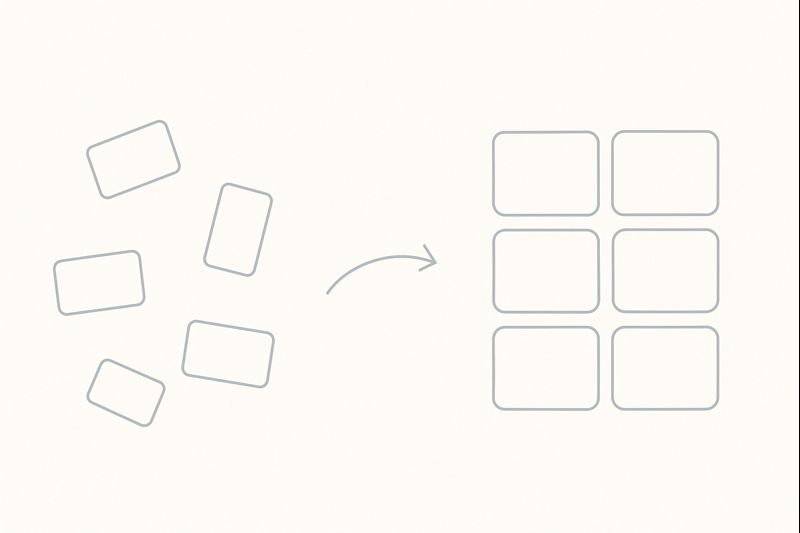
Without a system, content behaves like isolated output. Each piece exists independently, with limited ability to reinforce what came before it. When attention fades, the value fades with it.
This is why many creators work constantly but build very little that lasts.
The Difference Between Output and Assets
Output creates activity.
Assets create continuity.
A digital asset is something that continues to produce value without requiring constant recreation. Content becomes an asset only when it is connected to a structure that gives it purpose, context, and direction.
When content is designed to support a system, it compounds. When it is published without intent, it resets.
Understanding this distinction changes how content is planned and evaluated.
What Turns Content Into an Asset
Content becomes an asset when it is part of a larger framework that includes:
-
a clear entry point
-
internal connections between ideas
-
alignment with long-term intent
-
a defined role within the system
In this context, content stops being disposable. Each piece strengthens the structure rather than competing for attention.
This is also why treating affiliate marketing as a system leads to more durable results than focusing on volume alone.
Why Systems Outlive Platforms
Platforms change. Algorithms shift. Formats evolve.
Systems adapt.
When content is built on a platform-first mindset, its lifespan is limited by external rules. When it is built within a system-first mindset, platforms become distribution channels rather than dependencies.
This approach reduces risk and increases control. The system remains intact even as individual channels rise or fall.
Building Assets Before Chasing Scale
Scale magnifies what already exists.
If the structure is weak, scaling content increases noise. If the structure is clear, scaling accelerates growth. This is why builders focus on architecture first and expansion second.
Over time, this leads to long-term online income models that rely on refinement rather than constant reinvention.
The asset is not the content.
The asset is the system that gives content meaning.